
Common Mistakes to Avoid When Designing Prototype Plastic Molds
Release date:
2026-07-09 16:50
Author:
Common Mistakes to Avoid When Designing Prototype Plastic Molds Table of Contents Introduction to Plastic Mold Design Mistake 1: Ignoring Material Selection Mistake 2: Underestimating Cooling Time Mistake 3: Inadequate Draft Angles Mistake 4: Lack of Design for Manufacturability (DFM) Mistake 5: Neglecting Tolerances and Fit Mistake 6: Overlooking Mold Flow Analysis Mistake 7: Fai
Common Mistakes to Avoid When Designing Prototype Plastic Molds
Table of Contents
- Introduction to Plastic Mold Design
- Mistake 1: Ignoring Material Selection
- Mistake 2: Underestimating Cooling Time
- Mistake 3: Inadequate Draft Angles
- Mistake 4: Lack of Design for Manufacturability (DFM)
- Mistake 5: Neglecting Tolerances and Fit
- Mistake 6: Overlooking Mold Flow Analysis
- Mistake 7: Failing to Prototype
- Conclusion
- Frequently Asked Questions
Introduction to Plastic Mold Design
In the world of manufacturing, **prototype plastic molds** play a critical role in ensuring that products meet design specifications while maintaining cost-effectiveness. The intricate dance of material selection, cooling, and design must be finely balanced to produce high-quality prototypes. However, many designers make common mistakes that can lead to costly errors and delays. In this guide, we will explore these pitfalls and provide you with actionable insights to enhance your mold design process.
Mistake 1: Ignoring Material Selection
The choice of material is foundational in the design of **prototype plastic molds**. Many designers underestimate the impact that material properties can have on the performance of the mold and the final product. Selecting materials that do not align with the intended use of the prototype can lead to complications such as warping, cracking, or poor surface finish.
Understanding Material Properties
Different materials exhibit different behavior under heat and pressure. For instance, thermoplastics are often preferred for their ease of shaping and durability, while thermosetting plastics might be chosen for their heat resistance. Evaluating the mechanical and thermal properties of each material will help in making informed decisions that align with product requirements.
Common Material Choices
- **ABS (Acrylonitrile Butadiene Styrene):** Known for its toughness and impact resistance.
- **PP (Polypropylene):** Lightweight and excellent for chemical resistance.
- **PVC (Polyvinyl Chloride):** Versatile and offers good insulation properties.
Mistake 2: Underestimating Cooling Time
Cooling time is a crucial aspect of mold design that often gets overlooked. Insufficient cooling can lead to defects such as sink marks, warpage, and surface imperfections. **Understanding the dynamics of heat transfer** within the mold is essential to optimize this process.
Implementing Efficient Cooling Systems
Incorporating a well-designed cooling system can drastically reduce cycle times and improve the quality of the molded parts. Features such as conformal cooling channels can enhance heat distribution and ensure even cooling.
Calculating Cooling Time
To estimate cooling time, consider:
- The specific heat capacity of the material.
- The thickness of the part.
- The temperature difference between the mold and the melted plastic.
Mistake 3: Inadequate Draft Angles
Draft angles facilitate the easy removal of parts from the mold. Many designers fail to incorporate adequate draft angles, resulting in increased wear on the mold and potential damage to the part.
Determining the Right Draft Angle
A draft angle of at least 1-2 degrees is generally recommended. However, this angle may vary depending on the complexity and geometry of the part.
Common Issues from Poor Draft Angles
- **Sticking:** Parts may get stuck in the mold, requiring more force to eject.
- **Surface Damage:** Increased friction can lead to surface scratches on the molded part.
Mistake 4: Lack of Design for Manufacturability (DFM)
Ignoring DFM principles can lead to designs that are difficult or expensive to manufacture. DFM is critical to ensuring that the mold can be produced efficiently and effectively.
Key DFM Considerations
- **Simplifying Geometry:** Complex shapes can be difficult to mold and may increase costs.
- **Modular Design:** Designing molds in modular sections can facilitate easier maintenance and repair.
Collaborating with Manufacturers
Engaging with manufacturers early in the design process can provide valuable insights into practical constraints and possibilities, ensuring the design is manufacturable.
Mistake 5: Neglecting Tolerances and Fit
Tolerance specifications dictate how parts fit together. Many designers overlook the importance of defining tolerances, which can lead to assembly issues and reduced product quality.
Understanding Tolerance Levels
Tolerance levels should be defined based on the function of the part. For high-precision applications, tighter tolerances are necessary, whereas larger tolerances may suffice for less critical applications.
Common Tolerance Issues
- **Interference Fits:** Parts may be too tight, causing difficulty in assembly.
- **Loose Fits:** Parts may not hold together properly, leading to functional failures.
Mistake 6: Overlooking Mold Flow Analysis
Mold flow analysis simulates the injection process to identify potential issues with material flow, cooling, and solidification. Failing to conduct this analysis can lead to significant production issues.
Benefits of Mold Flow Analysis
- **Identifying Hot Spots:** Helps in locating areas that may not cool effectively.
- **Predicting Defects:** Assists in foreseeing common defects that may arise during production.
Utilizing Software Tools
Investing in advanced mold flow analysis software can provide valuable insights, leading to better decision-making in the design phase.
Mistake 7: Failing to Prototype
Finally, skipping the prototyping stage can be a costly mistake. **Prototyping** allows designers to validate their designs before full-scale production, reducing the risk of errors.
The Value of Prototyping
Creating a prototype helps to:
- Test fit and function.
- Identify design flaws.
- Validate material choices.
Prototyping Methods
- **3D Printing:** Offers rapid prototyping at a lower cost.
- **CNC Machining:** Provides high precision for functional prototypes.
Conclusion
Designing prototype plastic molds involves a multitude of considerations that can significantly impact the success of the final product. By avoiding these common mistakes—ranging from material selection to thorough prototyping—you can enhance the quality, efficiency, and cost-effectiveness of your manufacturing process. By adhering to best practices and leveraging the right technologies, your prototype molds will not only meet industry standards but also pave the way for innovative product development.
Frequently Asked Questions
1. What materials are best for prototype plastic molds?
The best materials include ABS, PP, and PVC, depending on the specific requirements of your product.
2. How can I improve cooling in my mold design?
Implementing conformal cooling channels and calculating optimal cooling times based on material properties can enhance cooling efficiency.
3. What is the ideal draft angle for mold design?
A draft angle of 1-2 degrees is typically recommended, although this may vary based on part complexity.
4. Why is mold flow analysis important?
Mold flow analysis helps predict potential issues in material flow and cooling, reducing the risk of defects in molded parts.
5. What are the benefits of prototyping my mold design?
Prototyping allows you to validate design choices, test fit and function, and identify potential flaws before full-scale production.
prototype plastic mold
26
2022
-
08
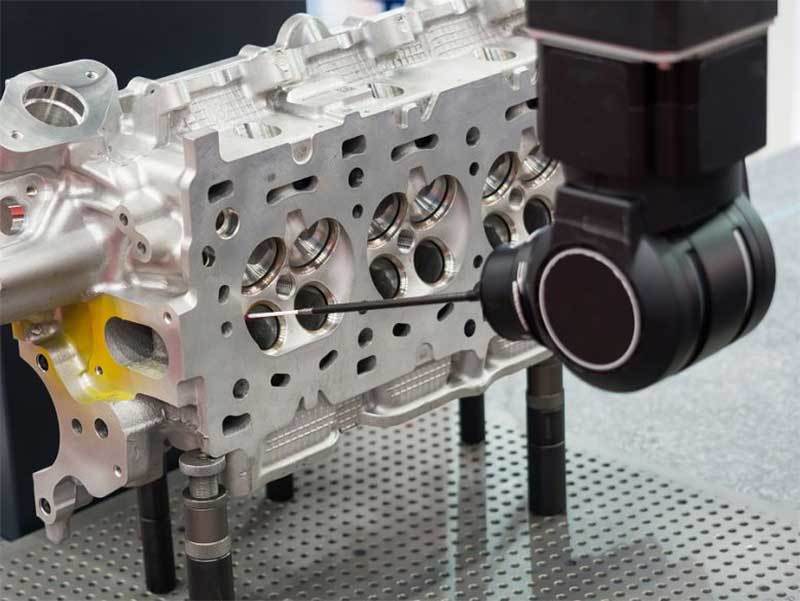
How to make a thermoplastic compression mold?
Thermoplastic is a type of resin that exists as a solid at room temperature but becomes plastic and pliable when heated—this occurs either through the melting of its crystalline structure or by flowing above its glass transition temperature.
09
2026
-
07

Common Mistakes to Avoid When Designing Prototype Plastic Molds
Common Mistakes to Avoid When Designing Prototype Plastic Molds Table of Contents Introduction to Plastic Mold Design Mistake 1: Ignoring Material Selection Mistake 2: Underestimating Cooling Time Mistake 3: Inadequate Draft Angles Mistake 4: Lack of Design for Manufacturability (DFM) Mistake 5: Neglecting Tolerances and Fit Mistake 6: Overlooking Mold Flow Analysis Mistake 7: Fai
08
2026
-
07
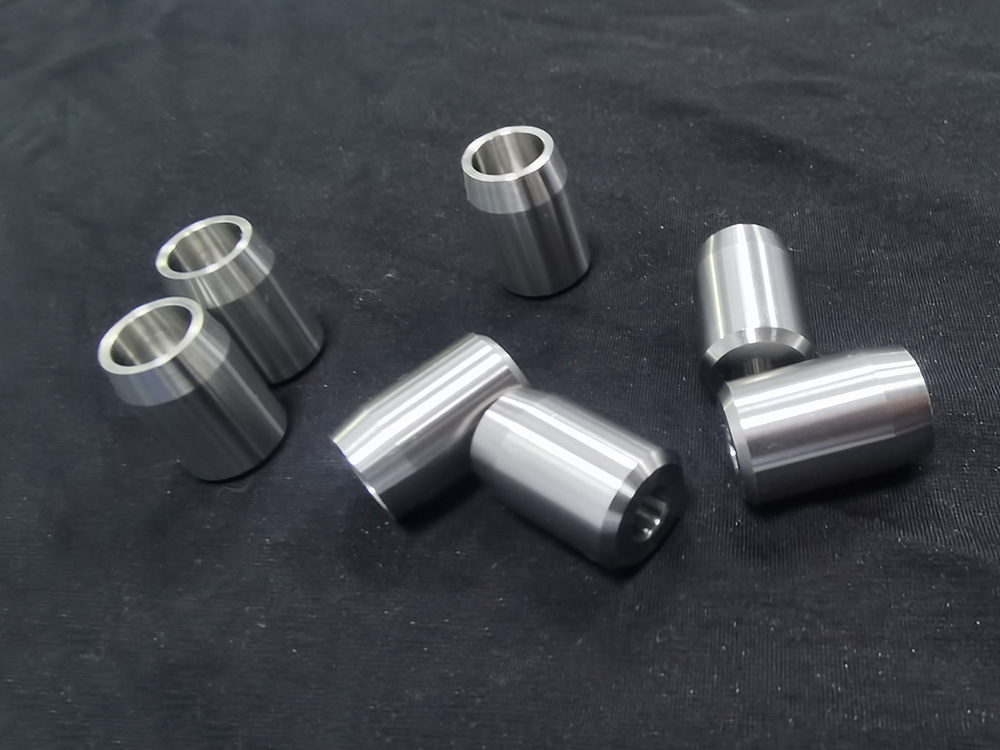
china Lathe parts machining manufacturers
Lathe Parts Machining is a manufacturing process that uses lathes to precisely machine metals, plastics, and composite materials. It primarily combines workpiece rotation with tool feed to achieve operations such as machining external diameters, internal holes, end faces, threads, grooves, and complex contours. As one of the most widely used machining methods in the machinery manufacturing industry, lathe parts machining is widely applied in automotive parts, industrial equipment, aerospace, electronics, hydraulic systems, and automation equipment due to its high machining efficiency, high dimensional accuracy, and excellent mass production capabilities.


Page keywords:
Ted Xing specializes in machining centers, automotive cooling molds, precision components for semiconductor equipment, and high-precision parts for medical devices. We also offer precision mechanical components, automation equipment parts, as well as advanced die-casting molds and plastic mold design and manufacturing. Additionally, we provide CNC product machining and lathe processing services, including three-axis, four-axis, and five-axis precision machining on machining centers. Our expertise extends to Japanese Makino slow-wire EDM and precision electro-discharge machining.
Contact Information
Address: No. 2 Xishan Road, Biquan Subdistrict, Bishan District, Chongqing City